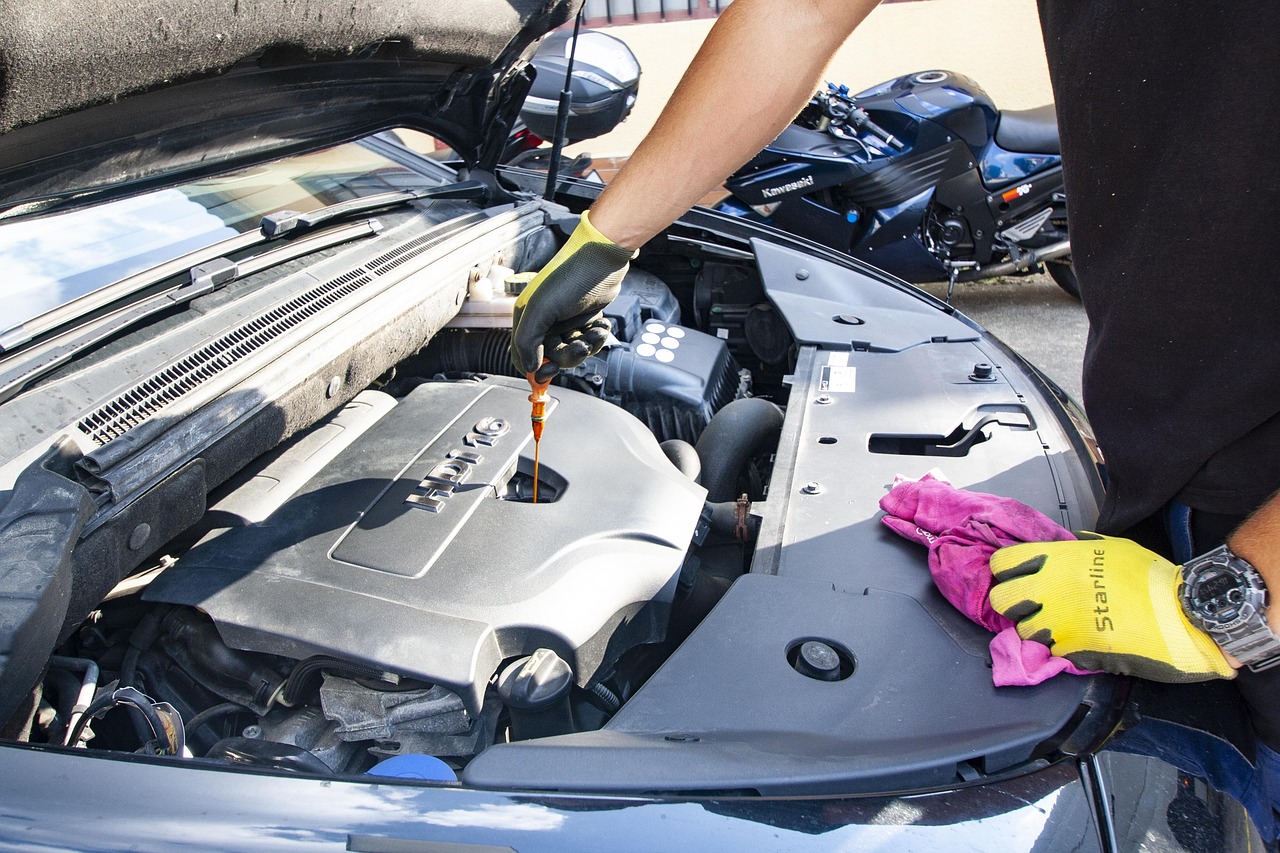
Checking your oil takes under five minutes and needs nothing more than a paper towel. Park on level ground, turn the engine off, and wait for the oil to drain back into the pan. Your owner's manual gives the right wait time. Then pull the dipstick, wipe it clean, push it all the way back in, pull it out again, and read where the oil sits between the two marks.
This guide covers how to check engine oil level step by step, including the mistakes that cause false readings and what to do when the level is low, full, or too high.
Quick answer: how to check your oil in under 5 minutes
- Park on level ground and set the parking brake.
- Turn the engine off and wait the time your manual suggests.
- Open the hood and find the dipstick, usually a bright yellow or orange loop.
- Pull it out and wipe it clean.
- Push it back in fully, then pull it out again.
- Read the oil level against the marks at the tip.
- Push it back in fully and close the hood.
Check your owner's manual first. It's the final word on your car's procedure. Some manufacturers say to check with a warm engine after a short rest, and others say to check cold. The manual also lists the correct oil type, viscosity and capacity.
What you need: a paper towel or lint-free rag and your owner's manual. A flashlight helps in a dim garage. Gloves are optional.
Before you start: why checking oil matters and when to do it
Engine oil lubricates, cools and cleans the moving parts inside your engine. When the level gets too low, those parts wear faster and the engine can be seriously damaged.
Many engines use a little oil between changes. How much varies by vehicle and age, and your manual may describe what is considered normal. That's why a quick look is worth doing even if you never see a leak.
How often to check
There's no universal rule. A common habit is to check about once a month and before a long trip. Check more often if your car is older, has high mileage, or has ever needed a top-up. Your manual may give its own advice, and it wins.
Should the engine be on or off?
For nearly all cars, the engine should be off when you check the oil. Don't check with the engine running unless your manual says to. (That's rare for oil. Some transmission fluid checks do require a running engine, which is a different dipstick.)
On warm versus cold, follow the manual. Either way, give the oil time to drain back into the pan at the bottom of the engine. Many sources suggest roughly 5 to 10 minutes after driving, but treat that as a general guide, not a fixed rule.
The oil light is not a level gauge
The oil pressure warning light means pressure has dropped. That can happen when oil is very low, but it can have other causes. If it comes on while you're driving, pull over safely and shut the engine off. Don't keep driving to see if it goes away.
Once the engine is off, check the level. If the level is low, add oil as described below. If the level looks normal and the light stays on, don't restart the engine and drive. Call for a tow or a mechanic, because there may be a real pressure problem that the dipstick can't show.
Step-by-step: how to check engine oil with a dipstick
Finding the dipstick
Open the hood and secure it with the prop rod or built-in struts. Look for a handle in a bright color, often yellow or orange, shaped like a loop or a T. Some are marked with a small oil can icon.
Many cars also have a second dipstick for the transmission. It's usually in a different spot, often farther back toward the firewall (the wall between the engine and the cabin), and it may be a different color or labeled. If you're unsure which is which, your manual has an engine bay diagram.
Pulling, wiping, reinserting and reading
- Park on level ground and set the parking brake.
- Turn off the engine and wait. Confirm the wait time in your manual.
- Open the hood and make sure it's held securely.
- Locate the dipstick using the description above.
- Pull it all the way out and wipe the whole lower end clean with your rag.
- Reinsert it fully until it seats, then pull it out again. This second pull is your real reading.
- Read the oil film. Hold the dipstick level, or tip it carefully so the oil doesn't run toward the handle. Look at where the oil stops against the marks.
- Push it back in fully and close the hood.
If the streak looks smeared or unclear, wipe it and take the reading again.
Safety cautions
- Engine parts and the exhaust manifold can stay hot long after you stop. Keep your hands away from them.
- Keep hair, jewelry and loose clothing clear of belts and the cooling fan.
- Never reach into or lean over the engine bay while the engine is running.
How to read the dipstick
The tip of the dipstick has two marks showing the minimum and maximum. Depending on the car, they may be dots, holes, notches, or a crosshatched (grid-pattern) zone. Some are labeled L and H, or MIN and MAX.
The oil level should land between them. On many cars the gap represents about one quart (roughly one liter), but that varies, so check your manual.
Low, okay, and overfull readings
| Reading | What it means | What to do |
|---|---|---|
| Between the marks, near full | Normal | Nothing. Close it up. |
| Midway between the marks | Fine | Recheck at your next regular check. |
| Near or at the low mark | Time to top up | Add a small amount of oil (see below) and recheck. |
| Below the low mark | Low enough to matter | Add oil promptly, then watch for leaks or fast loss. |
| No oil on the dipstick | Possibly empty | Don't drive the car. Add oil in small amounts with the engine off and recheck. If you still can't get a reading, or the light stays on, arrange a tow. |
| Above the max mark | Overfilled | Don't drive far. A small excess may be fine per the manual, but a large excess should be drained by a shop. Check the manual. |
Overfilling is not a safe margin. The spinning crankshaft can whip excess oil into foam, and foamy oil doesn't lubricate well. Extra oil can also stress seals.
What oil color and texture can tell you
Fresh oil is usually amber. Over time it turns darker brown or black. Dark oil alone doesn't mean it must be changed right now. Follow your manual's service schedule and any oil-life monitor.
Rub a drop between your fingers on a paper towel. These are reasons to get it inspected:
- Milky or foamy, like coffee with cream. This can point to coolant mixing with oil.
- Gritty feel or metallic particles.
- A strong fuel smell.
Don't try to diagnose these yourself. They're signs to see a mechanic.
How to add oil if the level is low
Choosing the right oil
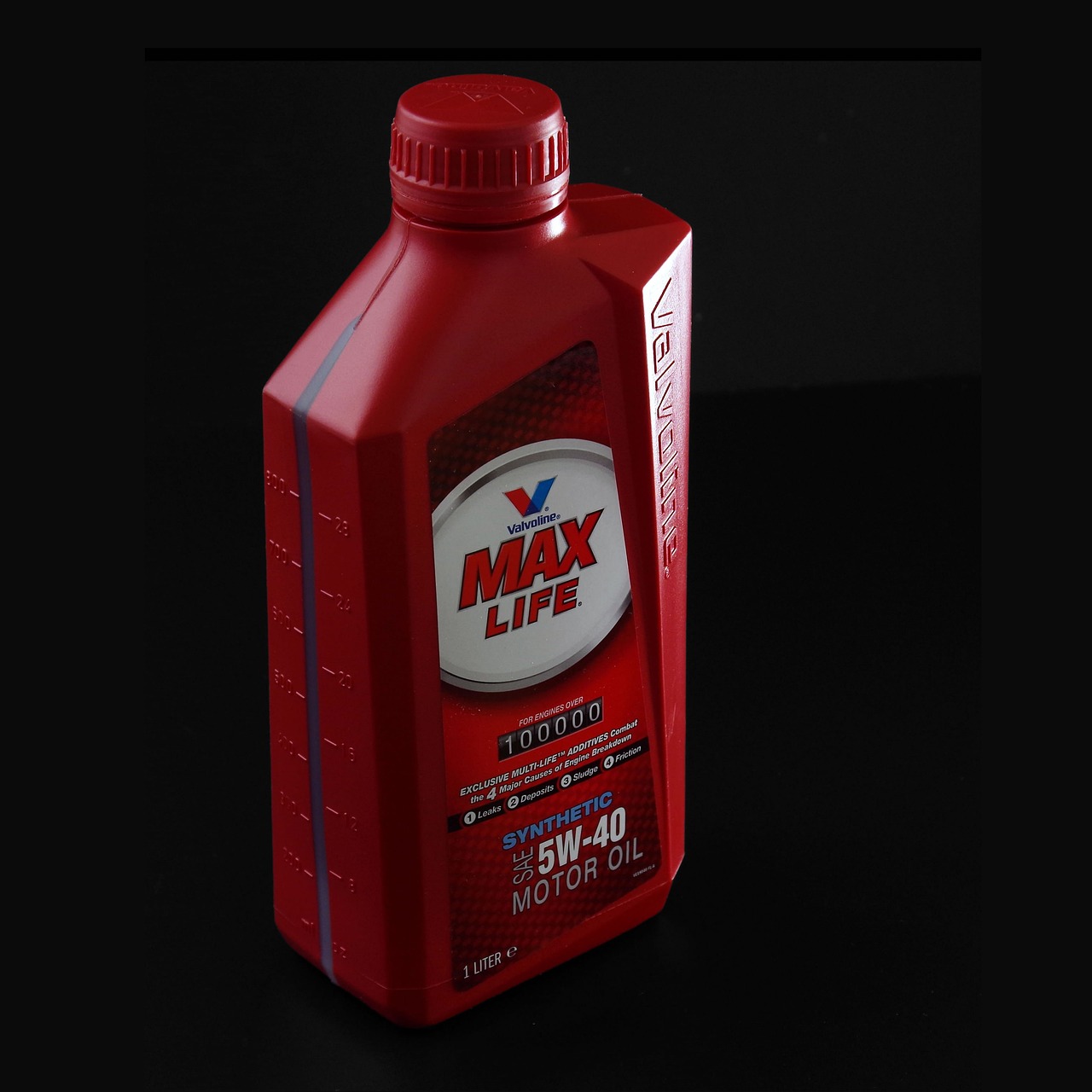
Your manual lists the oil type and viscosity. Viscosity is how thick the oil is, shown as a grade such as 5W-30. The grade is also often printed on the oil filler cap. Use what the manual specifies.
How much oil to add
If the dipstick is at the low mark, start with about half a quart. The gap between the marks is often about a quart, so half a quart is a cautious first step. Then recheck and add more only if needed.
Adding oil step by step
- Make sure the engine is off and the car is level.
- Find the oil filler cap. It usually has an oil can icon. Don't confuse it with the coolant or washer fluid caps.
- Remove the cap and place a funnel in the opening.
- Add about half a quart, pouring slowly.
- Wait a minute or two for the oil to run down.
- Recheck with the dipstick (wipe, reinsert, pull, read).
- Repeat in small amounts until the level is near the full mark. Stop there.
- Replace the cap tightly and push the dipstick back in fully. A loose cap or half-seated dipstick can let oil spray or leak while you drive.
Wipe up any spills, especially on hot parts, which can smoke or smell as they burn off.
If your car burns a bit of oil between changes, keeping a quart of the correct oil in the trunk is a practical habit.
Disposing of oil and rags
Don't pour used oil down a drain or onto the ground. Many auto parts stores and local recycling centers accept used oil. Keep oily rags and empty containers in a sealed bag or container until you can dispose of them properly, and check local rules.
Common mistakes that give a wrong reading
- Parking on a slope or uneven driveway. The oil pools to one side of the pan and the reading is off.
- Checking right after driving. Oil is still up in the engine, so the dipstick can look low. Wait the time your manual suggests (many sources say roughly 5 to 10 minutes).
- Skipping the wipe. The first pull is coated with oil from everywhere along the tube, so it can't show the true level.
- Not seating the dipstick fully. A half-inserted stick gives a misleading reading.
- Reading the smear. Look at the clear line where oil stops, not streaks along the sides.
- Using the wrong dipstick. The transmission dipstick has different markings, and on some vehicles that fluid is checked with the engine running. The procedure differs, so check your manual.
What if your car has no dipstick or an electronic oil level display?
Some newer vehicles check oil level with a sensor and show it on the instrument cluster or a menu screen. Some have no traditional dipstick at all.
Follow the procedure in your owner's manual. It may require the car to be level, with the engine off or running for a set time, before the display gives a reliable reading.
An oil-life monitor is different. It generally estimates how used the oil is, not how much is in the engine, so it doesn't replace a level check. Verify how yours works in the manual.
If you can't check the level yourself, a shop or dealer can. Don't guess.
When to see a mechanic
This is general information, not a diagnosis. Get the car looked at if you notice:
- Oil level that keeps dropping between checks, or drips and puddles under the car
- An oil pressure or check engine light, especially one that stays on when the level looks normal
- Ticking or knocking from the engine
- A burning-oil smell or blue smoke from the exhaust
- Milky oil, metal particles, or a large overfill
- A dipstick that reads empty. Don't drive the car. Add oil in small amounts with the engine off and recheck. If you still can't get a reading, or the warning light stays on, arrange a tow.
What to tell a mechanic: how often you check, how much oil you've added and over what time, the color and feel of the oil, any warning lights, any smells or smoke, and where you've noticed drips.
Quick checklist
- Read the oil section of your owner's manual.
- Level ground, engine off, wait for the oil to drain back.
- Pull, wipe, reinsert fully, pull again, read.
- Low means add about half a quart, wait, and recheck.
- Stop at the full mark, then secure the cap and dipstick.
- Dispose of used rags and oil properly.
FAQ
Should the engine be hot or cold? Follow your manual. Either way, the engine should be off, with a few minutes of rest.
How often should I check my engine oil? There's no universal rule. About once a month and before long trips is a common habit, and more often for older or high-mileage cars. Your manual may say otherwise.
What does milky or very dark oil mean? Milky or foamy oil can point to coolant mixing with oil, so have a mechanic inspect it. Dark oil alone is common and doesn't automatically mean a change is due. Follow your manual's schedule.
Can I check on a slope? It's best not to. Find level ground for an accurate reading.
Does the oil light mean my oil is low? Not necessarily. It signals low oil pressure. Pull over and shut the engine off, then check. If the level is normal and the light stays on, don't restart and drive. Call for a tow or a mechanic.
Sources and further reading
Your owner's manual is the best source for your car's oil type, capacity, check procedure and service schedule. The vehicle manufacturer's website and NHTSA (the US National Highway Traffic Safety Administration) are good places to look for official guidance and recall information.
Frequently asked questions
Should the engine be hot or cold when I check the oil?
Follow your owner's manual, since manufacturers differ. In all cases the engine should be off, with a few minutes of rest so oil drains back into the pan.
How long should I wait after turning off the engine?
Many sources suggest roughly 5 to 10 minutes, but this varies by vehicle. Confirm the time in your manual.
How often should I check my engine oil?
There's no universal rule. About once a month and before long trips is a common habit, and more often for older or high-mileage cars. Your manual may give its own advice.
How much oil should I add if the dipstick is at the low mark?
The gap between the marks is often about a quart, so start with about half a quart, wait a minute or two, and recheck. Check your manual for your car's specifics.
Is it bad to overfill engine oil?
Yes. Excess oil can foam when the crankshaft whips it, reducing lubrication, and can stress seals. If the level is above the max mark, don't drive far. A small excess may be fine per your manual, but a large excess should be drained by a shop.
What does milky or very dark oil mean?
Milky or foamy oil can point to coolant mixing with oil, so have a mechanic inspect it. Dark oil alone is common and doesn't automatically mean it needs changing. Follow your manual's schedule.
Does the oil light mean my oil is low?
Not always. It signals low oil pressure, which can result from low oil or other causes. Pull over safely, shut off the engine, and check the level. If the level is normal and the light stays on, don't restart and drive. Call for a tow or a mechanic.
This article was drafted with AI assistance and passed an automated accuracy and quality review before publishing. Spotted an error? Tell us and we'll fix it.